
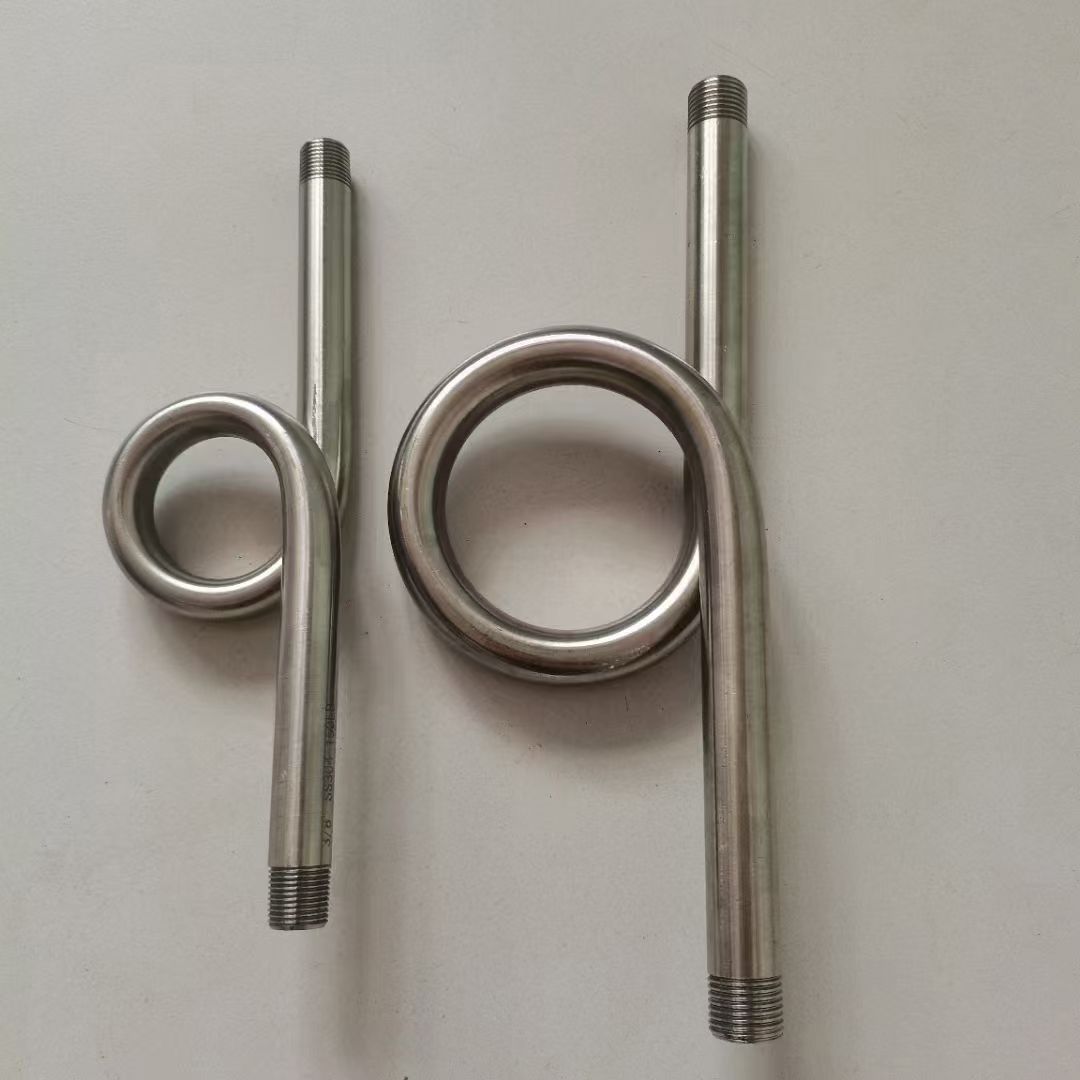

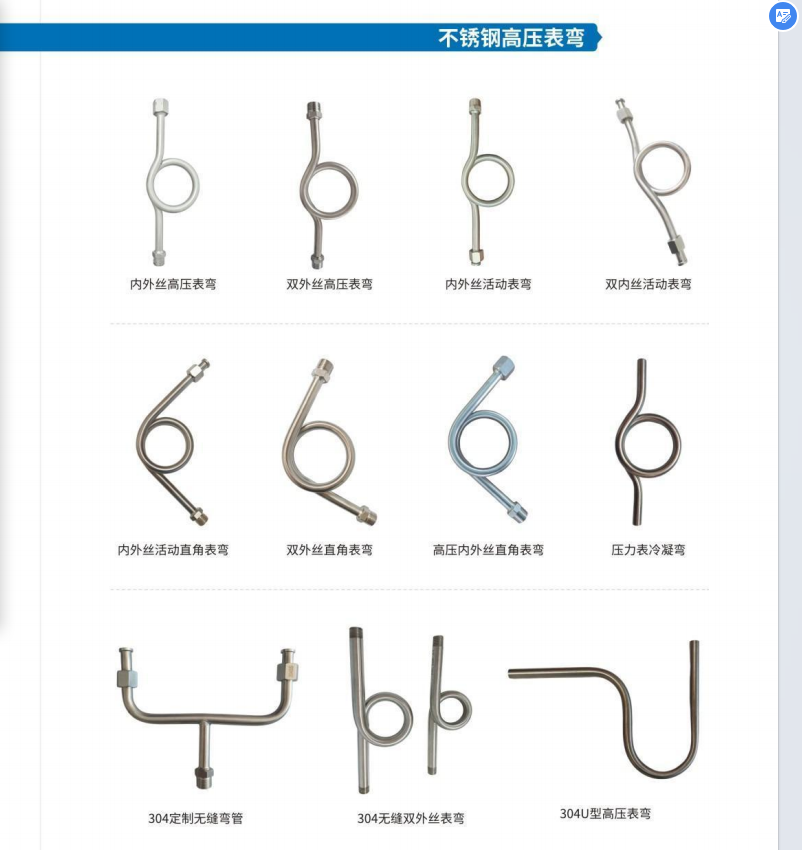

High-Pressure Gauge Elbow
Instrument-Specific High-Pressure Gauge Elbow (also known as Pressure Gauge Buffer Tube / Condensation Elbow) .
I. Definition and Core Functions
This is a specially designed curved protective fitting for high-pressure applications, connecting high-pressure pipelines to pressure gauges/transmitters. Its core functions are buffering, condensation, and interface adaptation:
Damping high-pressure pulses: Attenuates pressure surges caused by compressor start/stop cycles and load fluctuations, preventing needle overshoot and mechanism damage in pressure gauges;
Liquid seal cooling: Retains condensed liquid in the curved chamber, preventing direct entry of high-temperature refrigerant/steam into instruments to ensure measurement accuracy and extend service life;
Valve-equipped for maintenance without shutdown (typically fitted with a needle valve), facilitating instrument replacement;
Unified threaded interface (resolves mismatches between instrument and pipeline specifications).
2: Structural Types and Common Specifications
Angle and Shape:
90° (L-type): Most commonly used, space-efficient;
180° (O-type / Ring-type): Superior cushioning and condensation performance, suitable for high-pulse/high-temperature applications;
U-type: Enhanced liquid sealing, used for steam or high-temperature/high-pressure liquids.
3:Interfaces and Threads
Connection Type Common Specifications Applicable Devices
Internal Thread (Meter Connection) M20×1.5, M14×1.5 Standard high-pressure gauges
External Thread (Pipe Connection) G1/2“ (4 mm), NPT1/2” High-pressure copper tubing / steel pipe
4:Material and Pressure Resistance
304/316 Stainless Steel (Corrosion-resistant, compatible with refrigerants like R410A and demanding operating conditions,
pressure-rated up to 35MPa+, seamless tube construction);
5. Selection and Installation Guidelines
Three Key Selection Factors:
- Maximum system pressure (allow 1.5 times safety factor)
- Corrosiveness of refrigerant/medium
- Connection thread specifications
Installation Orientation:
- Bend tube opening upward/toward instrumentation to ensure condensate forms liquid seal and prevents backflow
Sealing: Use PTFE tape or specialized refrigerant sealant; ordinary tape is strictly prohibited.
Install a shut-off valve (needle valve) for convenient online maintenance and to prevent refrigerant leakage.
Keep away from strong vibration sources; add mounting brackets if necessary.
By Cartons